


Hey there! As an NPN transistor supplier, I often get asked about the maximum current an NPN transistor can handle. It's a crucial question, especially for those working on electronic projects where power management and component selection are key. So, let's dive right in and explore this topic.
First off, what's an NPN transistor? Well, it's a type of bipolar junction transistor (BJT) that consists of three layers of semiconductor material: two n-type layers sandwiching a p-type layer. NPN transistors are widely used in electronic circuits for amplification, switching, and other functions. They're like the workhorses of the electronics world, and understanding their current - handling capabilities is essential.
The maximum current an NPN transistor can handle is mainly determined by several factors. One of the most important ones is the transistor's physical design and construction. The size of the semiconductor die, the doping levels of the different layers, and the quality of the materials used all play a role. A larger die can generally handle more current because it has more surface area to dissipate heat. Heat is the enemy when it comes to current - handling capacity, as excessive heat can damage the transistor.

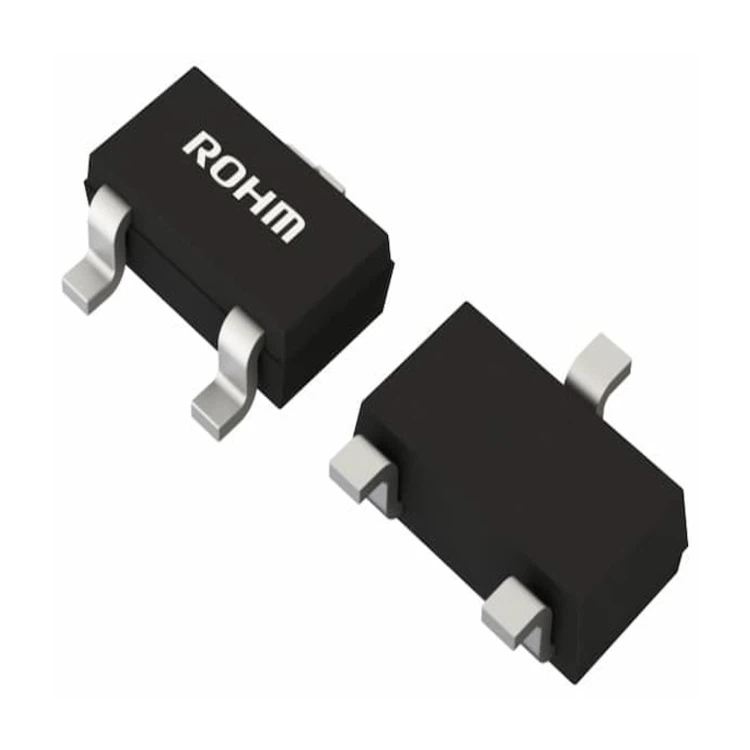
Another factor is the transistor's power rating. The power rating, usually given in watts, is a measure of how much power the transistor can safely dissipate without overheating. The power dissipated in a transistor is calculated using the formula (P = V_{CE} \times I_C), where (V_{CE}) is the voltage across the collector - emitter junction and (I_C) is the collector current. So, if you know the power rating of the transistor and the expected (V_{CE}), you can calculate the maximum allowable (I_C).
Let's talk about different types of NPN transistors and their current - handling capabilities. We have low - power NPN transistors, which are designed for applications where power consumption is a priority. These transistors typically have lower current - handling capacities, usually in the range of a few milliamperes to a couple of hundred milliamperes. They're great for use in small - scale electronic devices like sensors, low - power amplifiers, and battery - powered circuits. If you're looking for a Low Power Consumption NPN Transistor, we've got a great selection that can meet your needs.
On the other hand, there are high - power NPN transistors. These are built to handle much larger currents, often in the range of several amperes to tens of amperes. They're used in applications such as power supplies, motor control circuits, and audio amplifiers where high power is required. However, they also generate a significant amount of heat, so proper heat sinking is essential to keep them within their safe operating limits.
High - speed switching NPN transistors are another category. These transistors are optimized for fast switching between on and off states. While they may not handle as much continuous current as high - power transistors, they can handle high peak currents during the switching process. They're commonly used in digital circuits, pulse - width modulation (PWM) applications, and high - frequency switching power supplies. Check out our High - speed Switching NPN Transistor options if you're working on such projects.
Now, how can you determine the maximum current for a specific NPN transistor? The datasheet is your best friend. Every transistor comes with a datasheet that provides detailed information about its electrical characteristics, including the maximum collector current ((I_{C,max})). The datasheet will also give you information about other important parameters like the maximum base current ((I_{B,max})), the maximum collector - emitter voltage ((V_{CE,max})), and the power dissipation rating ((P_{D,max})).
It's important to note that in real - world applications, you should never operate a transistor at its absolute maximum ratings. There are always variations in manufacturing, temperature, and other factors that can affect the transistor's performance. It's a good practice to leave a safety margin, typically around 20 - 30%, to ensure the reliability and longevity of your circuit.
For example, if a transistor has a maximum collector current rating of 1A, it's better to design your circuit so that the collector current doesn't exceed 0.7 - 0.8A. This way, you can avoid overheating and potential damage to the transistor, especially in long - term operation.
When selecting an NPN transistor for your project, you need to consider the specific requirements of your circuit. First, determine the required collector current. If you're building a small - signal amplifier, a low - power transistor with a collector current in the milliampere range may be sufficient. But if you're working on a high - power application like a motor driver, you'll need a high - power transistor that can handle several amperes of current.
You also need to consider the voltage requirements. Make sure the transistor can handle the expected collector - emitter voltage without breaking down. Additionally, the switching speed is important if your circuit involves high - frequency or fast - switching operations.
As an NPN transistor supplier, I've seen firsthand how important it is to choose the right transistor for the job. We offer a wide range of NPN transistors with different current - handling capabilities, power ratings, and switching speeds. Whether you're a hobbyist working on a small project or an engineer designing a large - scale electronic system, we can help you find the perfect transistor for your needs.
If you're interested in purchasing NPN transistors or have any questions about their current - handling capabilities, feel free to reach out to us. We're here to assist you with your procurement and provide you with all the technical support you need. Our team of experts can help you select the right transistor based on your specific requirements and ensure that your project runs smoothly.
In conclusion, the maximum current an NPN transistor can handle depends on its physical design, power rating, and the application conditions. By carefully considering these factors and referring to the datasheet, you can select the appropriate transistor for your project. And remember, always leave a safety margin to ensure the reliability of your circuit.
References
- Electronic Devices and Circuit Theory, Robert L. Boylestad and Louis Nashelsky
- The Art of Electronics, Paul Horowitz and Winfield Hill


