

The Sensors and Detection Equipment Manufacturer!
Shenzhen Guanghong Electronics Co., Ltd. focusing on the distribution and sales of electronic components. Since its inception, we have been dedicated to providing high-quality electronic component products to global customers, covering various fields such as semiconductors, connectors, resistors, capacitors, sensors, and chips.
-
![Proximity Sensor for Industrial Automation]() Proximity Sensor for Industrial AutomationThe DT50-2B215252 is a block distance sensor manufactured by SICK Sick, Germany. This sensor has the characteristics of superior performance and high accuracy, which is very popular in the global
Proximity Sensor for Industrial AutomationThe DT50-2B215252 is a block distance sensor manufactured by SICK Sick, Germany. This sensor has the characteristics of superior performance and high accuracy, which is very popular in the global -
![Photoelectric Sensor for Industrial Automation]() Photoelectric Sensor for Industrial AutomationEST-SR21 Photoelectric sensor for industrial automation is a specular photoelectric sensor developed by Omron with a detection distance of up to 2 meters, high precision, fast response and strong
Photoelectric Sensor for Industrial AutomationEST-SR21 Photoelectric sensor for industrial automation is a specular photoelectric sensor developed by Omron with a detection distance of up to 2 meters, high precision, fast response and strong -
![Temperature Sensor for Industrial Applications]() Temperature Sensor for Industrial ApplicationsThe E52-P20 Temperature sensor for industrial applications is Omron's platinum resistance temperature sensor with high accuracy and good stability, suitable for laboratory, food processing and other
Temperature Sensor for Industrial ApplicationsThe E52-P20 Temperature sensor for industrial applications is Omron's platinum resistance temperature sensor with high accuracy and good stability, suitable for laboratory, food processing and other -
![Pressure Sensor for Industrial Automation]() Pressure Sensor for Industrial AutomationHSCMRRN001PD2A3 is a high-precision digital pressure sensor produced by Honeywell. It is compact and durable, suitable for medical equipment and industrial automation, stable output, easy
Pressure Sensor for Industrial AutomationHSCMRRN001PD2A3 is a high-precision digital pressure sensor produced by Honeywell. It is compact and durable, suitable for medical equipment and industrial automation, stable output, easy -
![Displacement Sensor for Industrial Automation]() Displacement Sensor for Industrial AutomationZX-LDA11 Displacement sensor for industrial automation is Omron's laser displacement sensor, with high accuracy (±0.02%), ranging 30mm, fast response, suitable for precision manufacturing and
Displacement Sensor for Industrial AutomationZX-LDA11 Displacement sensor for industrial automation is Omron's laser displacement sensor, with high accuracy (±0.02%), ranging 30mm, fast response, suitable for precision manufacturing and -
![High Voltage Frequency Converter]() High Voltage Frequency ConverterACS880-01-430A-3 is a high voltage inverter from ABB, with a power of 430A, suitable for industrial fans, pumps and other equipment. It is high efficiency and energy saving, accurate control, simple
High Voltage Frequency ConverterACS880-01-430A-3 is a high voltage inverter from ABB, with a power of 430A, suitable for industrial fans, pumps and other equipment. It is high efficiency and energy saving, accurate control, simple


Why choose us
Product Application
The electronic components provided by Guanghong Electronics are widely used in various industries and fields to meet the diverse needs of our customers. products span multiple industries, from consumer electronics to industrial, automotive electronics.
Our Service
As a professional electronic components distributor, Guanghong Electronics adheres to the "customer first" service philosophy and is committed to providing customers with comprehensive and personalized services. Our service system covers all stages, including pre-sales, during-sales, and after-sales, ensuring that customers receive the highest quality experience and support throughout the entire procurement process.
Our Certificate
Guanghong Electronics is committed to providing high-quality electronic components and services to our customers. To ensure product quality and standardized company management, we have obtained several certifications and patents covering quality management, environmental protection, and industry technology.
Features of Proximity Sensor
Non Contact Detection - It does not require any mechanical touch to detect an object, as a limit switch does. As a result, contact with either the sensing object or the sensor will not cause any damage.
Usable in severe environment - Even under difficult situations, such as when it comes into touch with water or other liquids, reliable sensing is achievable. The vast majority of sensors are oil-resistant and protected by IP67 standards.
High precision - It is suitable for precise object positioning because of its very high repeatability.
Short response time - Because of its high reaction frequency, stable detection is achievable even with fast-moving objects (3.3 kHz max.).
Long life - Due to its non-contact output, it has a long life and requires practically no maintenance.
Short sensing range - Photoelectric sensors have a greater sensing range, even if there are several ways to increase the detection range, such as expanding the detection coil size, employing non-shielded sensor heads, etc.
Only metal detection - Non-metals cannot be detected since detection is predicated on thermal loss owing to generated current, which cannot occur in non-metals.
Application of Sensors and Detection Equipment


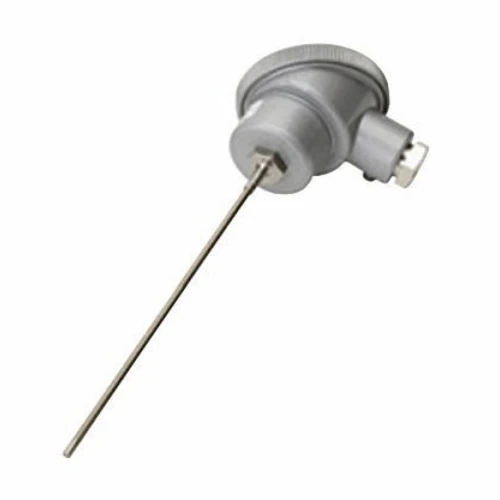
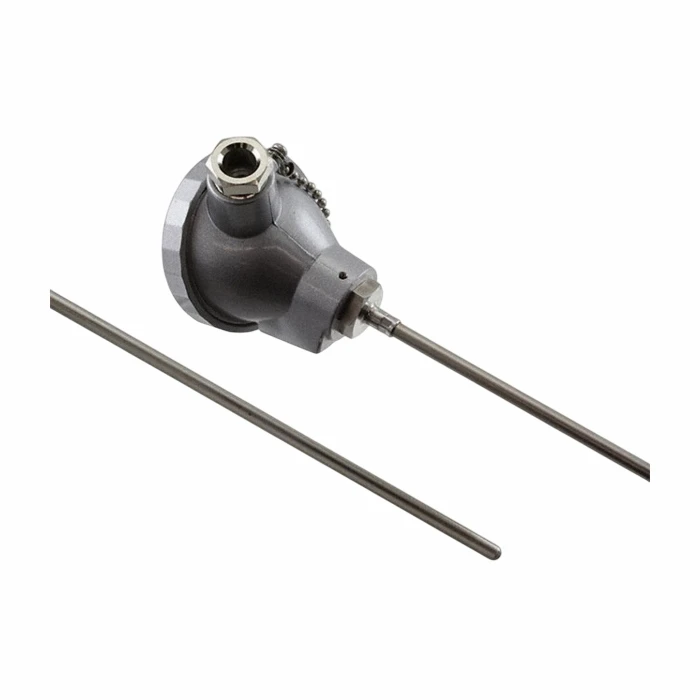
Home Automation System
Do you want to upgrade your lifestyle at home If so, you can utilize various types of sensors to enhance functionality and security. Some examples of helpful sensors for home automation systems are motion, fire, humidity, temperature, leak, and motion.
Intrusion Prevention System
Network-based intrusion detection systems (NIDS) have sensors strategically placed within the network. They help to monitor as much traffic as possible without creating performance bottlenecks. Also, they identify illegal or rogue control points and changes in behavior to prevent intrusion. Contact, radiation, motion, metal, and ultrasonic sensors are helpful in this case.
Fire Prevention System
Fire prevention systems with sensor technology can detect the potential of a fire starting. They alert occupants or automatically shut off devices to prevent a fire. Thus, flame sensors can be helpful to detect any presence of fire. They may detect the early development of fires to prevent and minimize human and property loss.
Server Room Monitoring
You can use versatile sensors to ensure optimal conditions and prevent equipment failure in the server room. In this case, sensors like temperature, humidity, leak, flame, gas, and non-contact can be very useful.
Agriculture Monitoring
Using sensors in different fields of agriculture can make it more efficient and sustainable. Some of the specific ways in which sensors are being used in agriculture include: monitoring soil moisture levels, measuring nutrient levels, tracking the growth of crops, detecting pests, and observing livestock. Check out Nybsys Smart Agriculture Monitoring System for more regarding this.
Vehicle Management
In the field of transportation, sensor technology is widely used for various applications like traffic control, vehicle tracking, speed measurements, and traffic estimation. Sensors integrated into vehicles and infrastructure provide a transparent view of potential threats and hazards. So you can remain safe on the roads. We offer sensor and other vehicle management services (Connected Transportation) from Nybsys.
Industrial Automation
Sensors can help to optimize production and operations. In this case, I suggest you check out our Smart Factory products and services to learn about relevant sensors. Thus, temperature, humidity, proximity, ultrasonic, particle, flame, flow, flaw, gas, and chemical sensors can be useful to upgrade your industry to a new level.
Environment Monitoring System
Sensors can collect real-time data on various environmental parameters like quality of air and water, soil conditions, and weather conditions. In an environment monitoring system, some standard sensors used are temperature, humidity, gas, water quality, soil, and weather sensors to monitor pollution, resource management, and protect the environment.
Parking Guidance System
Using different sensor technologies in the parking guidance system can provide real-time info regarding available parking spaces, enhancing the parking experience and optimizing parking lot usage. Some notable sensors that can be applied in this system are infrared, gyroscope, position, and wireless sensors.
Time and Attendance System
Sensors can play a vital role in the modern time and attendance systems. They can enable accurate and contactless employee registration. These sensors capture unique employee identifiers, like fingerprints, iris patterns, or facial features. After collecting the information, they can transmit it to a central database.
Access Control System
Access control systems employ various sensors to ensure security and prevent unauthorized access. These include physical presence sensors that can detect flame, metals, leaks, levels, gas, and chemicals. Other components of physical access control systems include access points such as commercial door locks, turnstiles, and security gate systems.
Selection by Detection Method
|
Items requiring confirmation |
Inductive Proximity Sensors |
Capacitive Proximity Sensors |
Magnetic Proximity Sensors |
|
Sensing object |
Metallic objects (iron, aluminum, brass, copper, etc.) |
Metallic objects, resins, liquids, powders, etc. |
Magnets |
|
Electrical noise |
Affected by positional relationship of power lines and signal lines, grounding of cabinet, etc. |
Almost no effect. |
|
|
Power supply |
DC, AC, AC/DC, DC with no polarity, etc. |
||
|
Current consumption |
Depends on the power supply, i.e., DC 2-wire models, DC 3-wire models, AC, etc. |
||
|
Sensing distance |
The sensing distance must be selected by considering the effects of factors such as the temperature, the sensing object, surrounding objects, and the mounting distance between Sensors. Refer to the set distance in the catalog specifications to determine the proper distance. When high precision sensing is required, use a Separate Amplifier model. |
||
|
Ambientv environment |
Temperature or humidity, or existence of water, oils, chemicals etc. |
||
|
Physical vibration, shock |
An extra margin must be provided in the sensing distance when selecting Sensors for use in environments subject tovibration and shock. |
||
|
Assembly |
Effects of tightening torque, Sensor size, number of wiring steps, cable length, distance between Sensors, surrounding objects. |
||
Packaging & Shipping

Our factory
Guanghong Electronics was established in 2008, initially focusing on PCB (Printed Circuit Board) business. After nearly two decades of development, we have expanded our capabilities far beyond PCB. Our PCB business has accumulated extensive technical expertise, and we now possess the capability to produce high-multilayer, high-precision, high-reliability, and diverse types of PCBs. We are capable of producing up to 32 layers of PCB, covering materials such as FR-4 rigid boards, FPC flexible boards, high-frequency boards, thermoelectric separation copper substrates, aluminum substrates, and more, to meet various customer needs.

FAQ
As one of the leading sensors and detection equipment manufacturers in China, we warmly welcome you to wholesale sensors and detection equipment in stock here and get quotation from our factory. All products are with high quality and competitive price.
Three phase AC motor drives, Process control automation solution, Robotics and constructionPopular Products


