


Hey there! As a zener diode supplier, I've been getting a lot of questions lately about how these little components behave in reverse bias. So, I thought I'd take a few minutes to break it down for you.
First off, let's talk about what a zener diode is. A zener diode is a special type of diode that is designed to operate in the reverse breakdown region. Unlike regular diodes, which are meant to conduct current in only one direction, zener diodes can conduct current in both directions, but they're mainly used for their ability to maintain a constant voltage across their terminals when they're reverse biased.
Now, when a zener diode is forward biased (that is, when the positive terminal of the power supply is connected to the anode and the negative terminal is connected to the cathode), it behaves just like a regular diode. Current flows easily through the diode, and there's only a small voltage drop across it.
But things get really interesting when we reverse bias the zener diode. When we connect the positive terminal of the power supply to the cathode and the negative terminal to the anode, at first, very little current flows through the diode. This is because the depletion region (a region in the diode where there are no free charge carriers) widens, creating a high resistance path for the current.

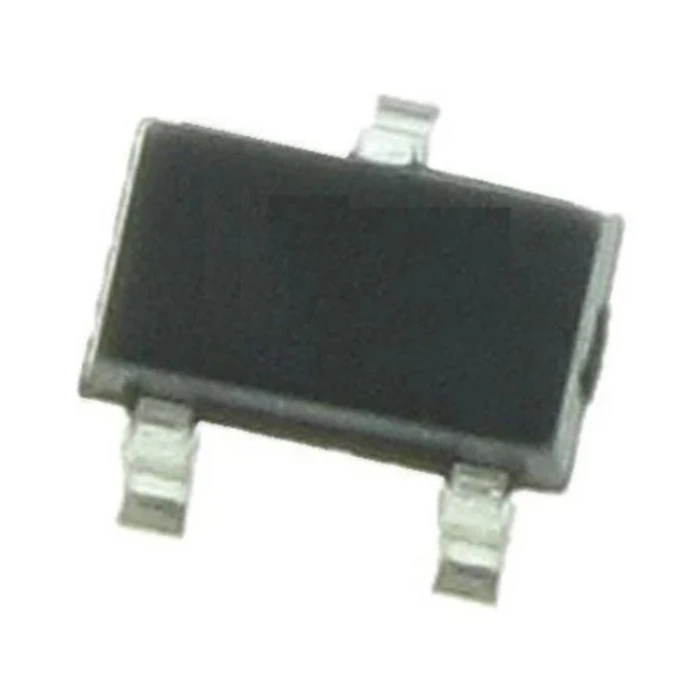
However, as we increase the reverse voltage applied to the zener diode, something called the zener breakdown occurs. There are actually two types of breakdown mechanisms in zener diodes: zener breakdown and avalanche breakdown.
Zener breakdown typically occurs in diodes with a low breakdown voltage (usually less than about 5 - 6 volts). In this case, the strong electric field in the depletion region is able to break the covalent bonds of the semiconductor atoms, creating electron - hole pairs. These newly created charge carriers then contribute to the current flow, and the diode starts to conduct.
Avalanche breakdown, on the other hand, happens in diodes with a higher breakdown voltage. Here, the free electrons in the depletion region gain enough energy from the applied electric field to collide with other atoms and knock off more electrons. This creates a chain reaction, similar to an avalanche, resulting in a large number of charge carriers and a significant current flow.
Once the breakdown occurs, the zener diode enters a region where it can maintain a relatively constant voltage across its terminals, regardless of the amount of current flowing through it (within a certain range). This is the key characteristic that makes zener diodes so useful in voltage regulation circuits.
Let's say you have a power supply that provides a variable voltage, and you need a stable voltage for a particular component in your circuit. You can use a zener diode in reverse bias to achieve this. By choosing a zener diode with the appropriate breakdown voltage, you can ensure that the voltage across the load (the component that needs the stable voltage) remains constant, even if the input voltage from the power supply fluctuates.
For example, if you have a 5 - volt zener diode in a circuit, when the reverse voltage across it reaches 5 volts, the diode breaks down and starts conducting. As long as the current through the diode stays within its specified limits, the voltage across the diode will stay at around 5 volts. So, you can connect your load in parallel with the zener diode, and it will receive a stable 5 - volt supply.
Now, we offer a variety of zener diodes here at our supply. We have Adjustable Zener Diode, which are great if you need to fine - tune the breakdown voltage according to your specific circuit requirements. These diodes allow you to adjust the voltage within a certain range, giving you more flexibility in your designs.
Our Low Noise Zener Diode are another popular choice. In applications where noise can be a problem, such as in sensitive electronic circuits like audio amplifiers or precision measurement devices, these diodes can help reduce the electrical noise and provide a cleaner, more stable voltage.
And if you need extremely accurate voltage regulation, our Precision Zener Diode are the way to go. These diodes are designed to have very tight tolerance on their breakdown voltage, ensuring that you get a highly accurate and stable voltage output.
When using zener diodes in reverse bias, it's important to pay attention to a few things. First, you need to make sure that the power rating of the zener diode is sufficient for your application. The power dissipated in the diode is given by the product of the voltage across it and the current flowing through it (P = V × I). If the power exceeds the diode's rated power, it can overheat and get damaged.
You also need to consider the maximum and minimum current ratings of the zener diode. If the current is too low, the diode may not enter the breakdown region properly, and the voltage regulation won't work as expected. On the other hand, if the current is too high, it can cause the diode to fail.
In summary, zener diodes in reverse bias are a powerful tool for voltage regulation. Their ability to maintain a constant voltage across their terminals makes them indispensable in many electronic circuits. Whether you're working on a simple hobby project or a complex industrial application, there's a zener diode out there that can meet your needs.
If you're interested in purchasing zener diodes for your projects, we'd love to have a chat with you. Contact us to discuss your requirements, and we'll help you find the perfect zener diodes for your specific application. We have a wide range of products, and our team of experts is always ready to assist you.
References
- "Microelectronic Circuits" by Adel S. Sedra and Kenneth C. Smith
- "Electronic Devices and Circuit Theory" by Robert L. Boylestad and Louis Nashelsky


