


Hey there! As an NPN transistor supplier, I've been dealing with these little electronic wonders for quite some time. Today, I'm gonna share with you how to measure the parameters of an NPN transistor. It's super important to understand these measurements, whether you're a hobbyist tinkering with circuits or a professional in the electronics industry.
First off, let's quickly go over what an NPN transistor is. It's a type of bipolar junction transistor (BJT) that consists of three layers of semiconductor material: two n-type layers sandwiching a p-type layer. These transistors are widely used in electronic circuits for amplification and switching purposes.
Now, onto the measurements. There are several key parameters that we need to measure, and I'll walk you through each one.
1. Base - Emitter Voltage (VBE)
The base - emitter voltage is the voltage drop across the base and emitter terminals of the transistor. To measure VBE, you'll need a multimeter. Set your multimeter to the DC voltage mode. Connect the positive lead of the multimeter to the base terminal of the NPN transistor and the negative lead to the emitter terminal.
In a forward - biased condition (when the transistor is conducting), the typical value of VBE for a silicon NPN transistor is around 0.6 - 0.7 volts. If you measure a significantly different value, it could indicate a problem with the transistor, like a short circuit or an open circuit.
2. Collector - Emitter Voltage (VCE)
The collector - emitter voltage is the voltage drop across the collector and emitter terminals. Again, use your multimeter in DC voltage mode. Connect the positive lead to the collector terminal and the negative lead to the emitter terminal.
The value of VCE depends on the operating mode of the transistor. In the saturation mode, VCE is very low, usually less than 0.2 volts. In the active mode, VCE can vary depending on the circuit configuration and the amount of current flowing through the transistor. If VCE is close to the supply voltage, it might mean that the transistor is in the cutoff mode (not conducting).
3. DC Current Gain (β or hFE)
The DC current gain is a measure of how much the transistor can amplify the base current. It's defined as the ratio of the collector current (IC) to the base current (IB), i.e., β = IC / IB.
To measure β, you can use a transistor tester or a circuit setup. One common way is to set up a simple circuit with a power supply, a resistor in the base circuit to limit the base current, and a resistor in the collector circuit. Measure the base current and the collector current using an ammeter. Then calculate β by dividing the collector current by the base current.

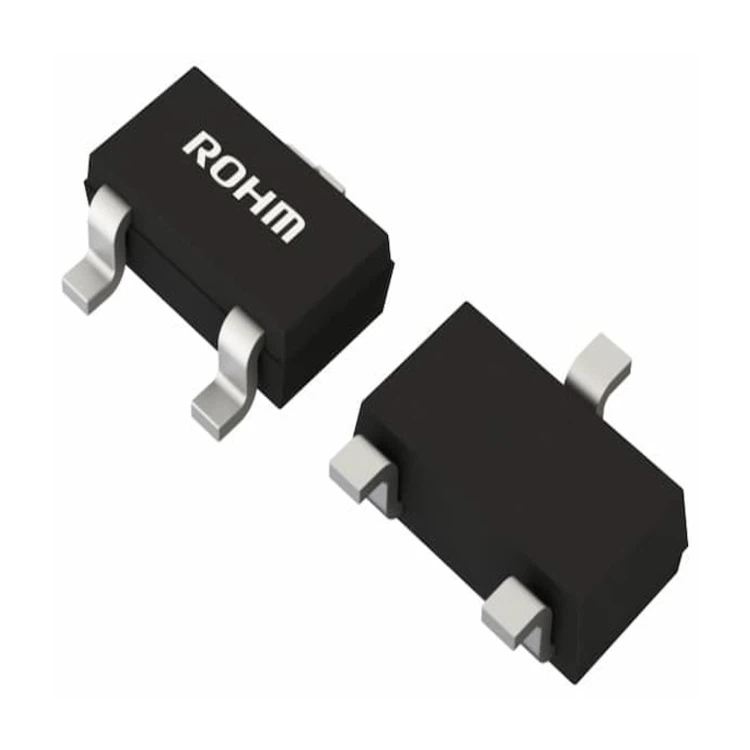
Most NPN transistors have a β value in the range of 50 - 300, but it can vary depending on the transistor type and the operating conditions.
4. Collector Current (IC)
The collector current is the current flowing through the collector terminal of the transistor. To measure IC, you can insert an ammeter in series with the collector circuit. Make sure to set your ammeter to the appropriate current range.
The collector current is an important parameter because it determines the power dissipation of the transistor and its ability to drive a load. If the collector current is too high, the transistor might overheat and get damaged.
5. Reverse Leakage Current (ICBO and ICEO)
ICBO is the reverse leakage current from the collector to the base when the emitter is open - circuited. ICEO is the reverse leakage current from the collector to the emitter when the base is open - circuited.
These leakage currents are typically very small, in the order of microamps or even nanoamps. To measure them, you'll need a sensitive ammeter. High values of leakage current can indicate a defective transistor or a problem with the circuit.
Now, as an NPN transistor supplier, I offer a wide range of NPN transistors to meet your needs. For those of you looking for High - speed Switching NPN Transistor, we have a great selection. These transistors are perfect for applications where fast switching is required, like in digital circuits.
If you're more concerned about power consumption, our Low Power Consumption NPN Transistor series is the way to go. These transistors are designed to operate with minimal power, making them ideal for battery - powered devices.
Measuring the parameters of an NPN transistor is crucial for ensuring its proper operation in a circuit. By accurately measuring VBE, VCE, β, IC, and the leakage currents, you can troubleshoot problems, select the right transistor for your application, and optimize the performance of your electronic circuits.
If you're interested in purchasing NPN transistors for your projects or business, I'd love to have a chat with you. Just reach out, and we can discuss your specific requirements and find the best solutions for you.
References
- "Electronic Devices" by Thomas L. Floyd
- "The Art of Electronics" by Paul Horowitz and Winfield Hill


