


Selecting a Schottky - clamped NPN transistor is a crucial decision for many electronic design projects. As an experienced NPN transistor supplier, I've witnessed firsthand the impact of making the right or wrong choice. In this blog, I'll share some key factors to consider when selecting a Schottky - clamped NPN transistor.
Understanding Schottky - clamped NPN Transistors
Before diving into the selection process, it's essential to understand what a Schottky - clamped NPN transistor is. A Schottky - clamped NPN transistor combines an NPN bipolar junction transistor (BJT) with a Schottky diode connected between the base and the collector. This configuration helps to prevent the transistor from going into deep saturation, which can significantly reduce the switching time and improve the overall performance of the circuit.

Key Parameters to Consider
1. Voltage Ratings
- Collector - Emitter Voltage (VCEO): This is the maximum voltage that can be applied between the collector and the emitter when the base is open - circuited. It's crucial to choose a transistor with a VCEO rating higher than the maximum voltage expected in your circuit. For example, if your circuit operates at 24V, you might want to select a transistor with a VCEO of at least 30V to provide a safety margin.
- Collector - Base Voltage (VCBO): This is the maximum voltage that can be applied between the collector and the base when the emitter is open - circuited. Similar to VCEO, it should be higher than the expected voltage in the circuit.
2. Current Ratings
- Collector Current (IC): This is the maximum continuous current that the collector can carry. You need to ensure that the transistor can handle the expected collector current in your application. For high - power applications, you may need a transistor with a high IC rating. For instance, in a power supply circuit, if the load requires a current of 5A, you should choose a transistor with an IC rating greater than 5A.
- Base Current (IB): The base current is used to control the collector current. It's important to know the relationship between IB and IC (the current gain, hFE) to properly bias the transistor. A transistor with a high hFE requires less base current to achieve a given collector current, which can be beneficial in low - power circuits.
3. Switching Speed
The switching speed of a Schottky - clamped NPN transistor is a critical factor, especially in high - frequency applications. The Schottky diode in the transistor helps to reduce the storage time, which is the time it takes for the transistor to turn off. Look for transistors with short turn - on and turn - off times. Our High - speed Switching NPN Transistor series is designed to meet the requirements of high - frequency switching applications, offering fast switching times and excellent performance.
4. Power Dissipation
- Total Power Dissipation (PD): This is the maximum power that the transistor can dissipate without overheating. It's calculated as the product of the collector - emitter voltage and the collector current (PD = VCE × IC). You need to ensure that the transistor's PD rating is higher than the power it will dissipate in your circuit. In high - power applications, proper heat sinking may be required to keep the transistor within its safe operating temperature range.
5. Temperature Range
The operating temperature range of the transistor is an important consideration, especially in harsh environments. Some applications may require transistors that can operate at high temperatures, while others may need transistors that can withstand low temperatures. Make sure the transistor you choose has an operating temperature range that suits your application.
Application - Specific Considerations
1. Low - Power Applications
In low - power applications, such as battery - powered devices, power consumption is a major concern. Our Low Power Consumption NPN Transistor series is an excellent choice for these applications. These transistors are designed to have low leakage currents and low power dissipation, which helps to extend the battery life of the device.
2. High - Frequency Applications
For high - frequency applications, such as radio frequency (RF) circuits, the switching speed and frequency response of the transistor are crucial. Look for transistors with high transition frequencies (fT) and low parasitic capacitances. The Schottky - clamped design helps to improve the high - frequency performance by reducing the storage time.
3. Power Amplification Applications
In power amplification applications, such as audio amplifiers, the transistor needs to be able to handle high power and provide high gain. You need to consider the power dissipation, current gain, and linearity of the transistor. A transistor with a high hFE and a wide linear region can provide better amplification performance.
Package Considerations
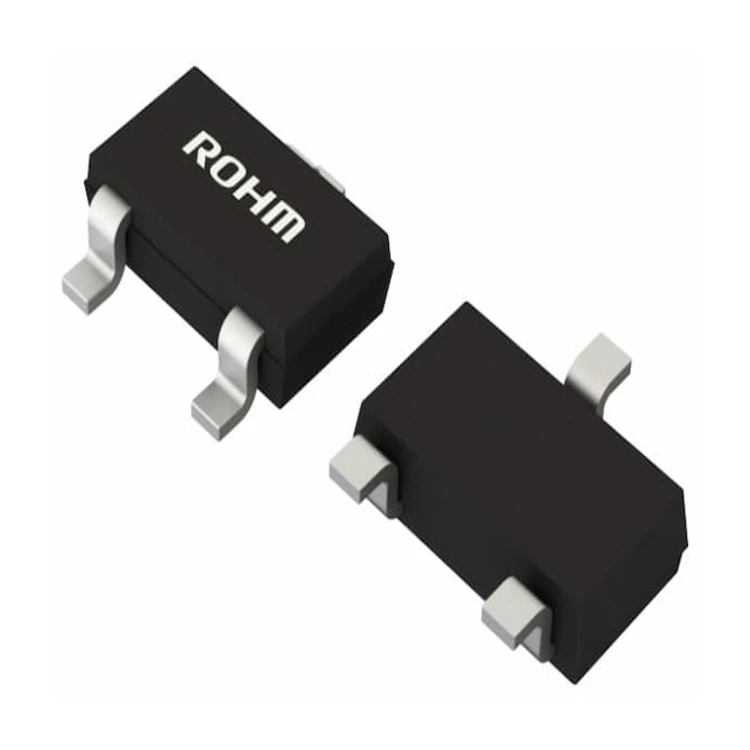
The package of the transistor is also an important factor to consider. Different packages have different thermal characteristics, mechanical properties, and pin configurations.
- Through - Hole Packages: These packages are suitable for prototyping and applications where manual soldering is required. They provide good mechanical stability and are easy to handle.
- Surface - Mount Packages: Surface - mount packages are commonly used in high - density printed circuit boards (PCBs). They offer smaller size, better thermal performance, and are suitable for automated assembly processes.
Selecting the Right Supplier
When selecting a Schottky - clamped NPN transistor, choosing the right supplier is as important as choosing the right transistor. As an NPN transistor supplier, we offer a wide range of high - quality Schottky - clamped NPN transistors. We have a team of experienced engineers who can provide technical support and help you select the most suitable transistor for your application. Our products are tested and verified to ensure high reliability and performance.
If you're in the process of selecting a Schottky - clamped NPN transistor for your project, we invite you to contact us for more information. Our experts are ready to assist you in making the best choice and can also provide samples for testing. Whether you're working on a small - scale prototype or a large - scale production project, we have the right solution for you. Feel free to reach out to us to start a procurement negotiation and find the perfect Schottky - clamped NPN transistor for your needs.
References
- "Microelectronic Circuits" by Adel S. Sedra and Kenneth C. Smith
- "The Art of Electronics" by Paul Horowitz and Winfield Hill


