


The emitter current of an NPN transistor is a fundamental characteristic that plays a crucial role in the operation of electronic circuits. As a leading supplier of NPN transistors, understanding the intricacies of emitter current is essential for providing optimal solutions to our customers. In this blog post, we'll delve into the concept of emitter current, its significance, and how it relates to the performance of NPN transistors.
Understanding the Basics of an NPN Transistor
Before we dive into emitter current, let's briefly review the basic structure and operation of an NPN transistor. An NPN transistor consists of three semiconductor layers: a thin, lightly doped P-type base region sandwiched between two heavily doped N-type regions, the emitter and the collector.
When a small current is applied to the base terminal, it allows a much larger current to flow between the emitter and the collector. This current amplification property makes NPN transistors extremely useful in a wide range of applications, including amplification, switching, and voltage regulation.
What is Emitter Current?
The emitter current ($I_E$) of an NPN transistor is the total current flowing out of the emitter terminal. It is the sum of the base current ($I_B$) flowing into the base terminal and the collector current ($I_C$) flowing into the collector terminal. This relationship can be expressed by the following equation:
[I_E = I_B+I_C]
The emitter current is a key parameter that determines the overall current handling capacity of the transistor. It is influenced by several factors, including the bias conditions, the doping levels of the semiconductor materials, and the temperature.
Significance of Emitter Current
The emitter current is crucial for several reasons. First, it directly affects the amplification factor of the transistor. The ratio of the collector current to the base current, known as the common-emitter current gain ($\beta$), is defined as:
[\beta=\frac{I_C}{I_B}]
Since (I_E = I_B + I_C), a change in the emitter current can lead to a corresponding change in the collector and base currents, thereby affecting the amplification performance of the transistor.

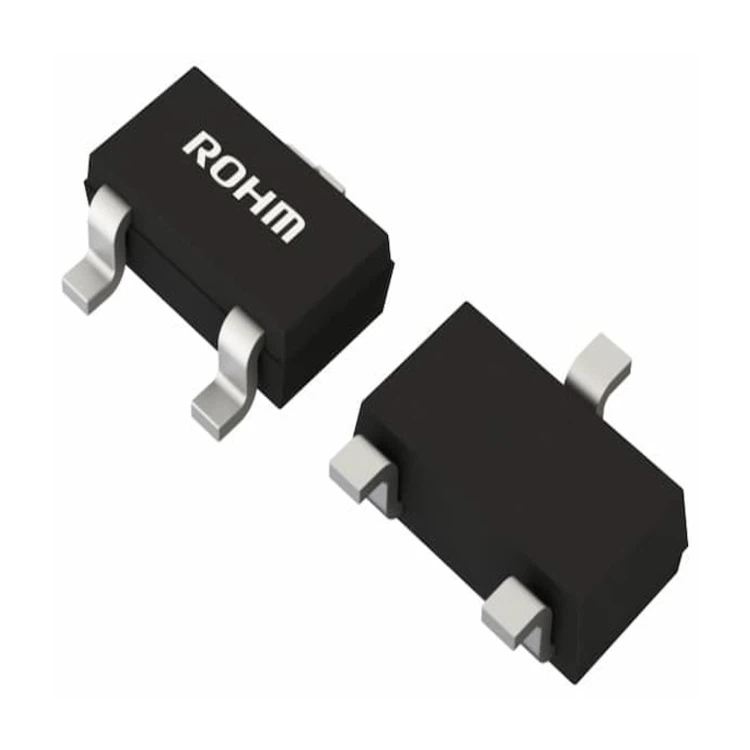
Second, the emitter current is related to the power dissipation of the transistor. The power dissipated in a transistor is given by the product of the collector-emitter voltage ($V_{CE}$) and the collector current ($I_C$). A higher emitter current generally leads to higher power dissipation, which can affect the reliability and lifespan of the transistor. Therefore, it's important to carefully consider the emitter current when designing circuits to ensure that the transistor operates within its specified power limits.
Factors Affecting Emitter Current
- Bias Conditions: The bias conditions applied to the transistor, specifically the base-emitter voltage ($V_{BE}$), have a significant impact on the emitter current. According to the Shockley diode equation, the emitter current is exponentially related to the base - emitter voltage. A small increase in (V_{BE}) can result in a large increase in (I_E).
- Doping Levels: The doping levels of the semiconductor materials in the emitter, base, and collector regions also affect the emitter current. Higher doping levels in the emitter region generally lead to a larger emitter current, as there are more charge carriers available for conduction.
- Temperature: Temperature has a profound effect on the emitter current. As the temperature increases, the mobility of charge carriers increases, and the reverse saturation current of the base - emitter junction also increases. This can lead to an increase in the emitter current, which may cause thermal runaway if not properly regulated.
Applications and Considerations in Different NPN Transistor Types
- Low Power Consumption NPN Transistor: For applications where power efficiency is a top priority, such as battery - powered devices, Low Power Consumption NPN Transistor are often preferred. These transistors are designed to operate with a relatively low emitter current, minimizing power dissipation. When selecting a low - power NPN transistor, it's important to ensure that the emitter current is sufficient to meet the requirements of the application while keeping power consumption in check.
- High - speed Switching NPN Transistor: In high - speed switching applications, such as digital circuits and RF amplifiers, High - speed Switching NPN Transistor are commonly used. These transistors need to be able to quickly turn on and off, which requires careful control of the emitter current. A proper emitter current can ensure fast switching times and minimize switching losses.
Measuring Emitter Current
To measure the emitter current of an NPN transistor, a simple circuit can be set up. A power supply is connected across the collector and emitter terminals, and a resistor is placed in series with the emitter. By measuring the voltage across this resistor using a voltmeter and applying Ohm's law ((I = V/R)), the emitter current can be calculated.
It's important to note that when measuring the emitter current, the transistor should be operating under the appropriate bias conditions to ensure accurate results. Additionally, the measurement equipment should have a high enough impedance to avoid loading the circuit and affecting the current values.
Importance for Circuit Designers
For circuit designers, understanding the emitter current is essential for optimizing circuit performance. By carefully selecting the appropriate NPN transistor and adjusting the bias conditions, designers can ensure that the transistor operates at the desired emitter current, leading to efficient amplification, reliable switching, and proper voltage regulation.
When designing a circuit, it's crucial to consider the maximum and minimum allowable emitter current values specified in the transistor's datasheet. Exceeding the maximum emitter current can lead to overheating and damage to the transistor, while operating below the minimum current may result in poor performance.
As a Supplier, Our Role
As an NPN transistor supplier, we play a vital role in providing our customers with the necessary information and products to meet their specific requirements. Our team of experts is well - versed in the technical details of NPN transistors, including emitter current characteristics. We can assist customers in selecting the right transistor based on their application needs, taking into account factors such as the required emitter current, power consumption, and switching speed.
In addition to offering a wide range of high - quality NPN transistors, we also provide comprehensive technical support. Whether you have questions about emitter current calculations, bias circuit design, or thermal management, our technical support team is here to help you find the best solutions.
Contact Us for Your NPN Transistor Needs
If you're in the market for NPN transistors, we invite you to contact us to discuss your specific requirements. Our experienced sales team can provide you with detailed product information, pricing, and availability. We are committed to providing you with the best possible service and the highest quality NPN transistors to ensure the success of your projects.
References
- Boylestad, R. L., & Nashelsky, L. (2012). Electronic Devices and Circuit Theory. Pearson.
- Streetman, B. G., & Banerjee, S. (2006). Solid State Electronic Devices. Prentice Hall.


