


In the realm of electronics, NPN transistors stand as fundamental building blocks, playing a crucial role in a wide array of applications. As a trusted NPN transistor supplier, I've witnessed firsthand the significance of these components and the diverse needs they address. Today, I'd like to delve into a key aspect of NPN transistors: the h - parameter.
Understanding the Basics of NPN Transistors
Before we get into the h - parameter, let's briefly recap what an NPN transistor is. An NPN transistor consists of three layers of semiconductor material: two n - type regions sandwiching a thin p - type region. The three terminals of an NPN transistor are the emitter, base, and collector.
When a small current is applied to the base terminal, it can control a much larger current flowing between the collector and the emitter. This property makes NPN transistors ideal for use in amplification and switching applications. For instance, in audio amplifiers, they can boost the weak audio signals to a level suitable for speakers. In digital circuits, they can serve as electronic switches, opening and closing circuits based on the input signal.
What are h - parameters?
The h - parameters, also known as hybrid parameters, are a set of four parameters that describe the electrical behavior of a transistor in a linear, small - signal model. These parameters provide a convenient way to analyze and design transistor circuits without having to deal with the complex internal physics of the transistor.
The four h - parameters are as follows:
- h₁₁ (hie): This is the input impedance. It represents the ratio of the small - signal input voltage to the small - signal input current at the base of the transistor, with the output short - circuited. In other words, it tells us how the transistor resists the flow of current at its input terminal (the base). A higher h₁₁ value means that the transistor presents a higher impedance to the input source, which can be important in circuits where the source has a limited ability to supply current.
- h₁₂ (hre): This is the reverse voltage feedback ratio. It is the ratio of the small - signal input voltage to the small - signal output voltage, with the input open - circuited. This parameter accounts for the small amount of voltage feedback from the output back to the input. In most well - designed circuits, this value is very small, as we generally want to minimize the influence of the output on the input.
- h₂₁ (hfe): This is the forward current gain. It is the ratio of the small - signal output current (collector current) to the small - signal input current (base current), with the output short - circuited. The hfe value is of great importance in amplifier circuits, as it determines how much the transistor can amplify the input current. For example, if hfe is 100, a small base current change will result in a 100 - times larger change in the collector current.
- h₂₂ (hoe): This is the output admittance. It represents the ratio of the small - signal output current to the small - signal output voltage, with the input open - circuited. A lower h₂₂ value indicates that the transistor has a higher output impedance, which can be beneficial in some applications where we want to minimize the loading effect on the output.
Importance of h - parameters in Circuit Design
The h - parameters are invaluable in the design and analysis of transistor circuits. They allow engineers to simplify the complex behavior of transistors into a set of linear equations, making it easier to predict the performance of the circuit.
For example, in an amplifier circuit, the hfe value determines the voltage gain of the amplifier. By knowing the hfe, the input impedance (h₁₁), and the output impedance (1/h₂₂), engineers can calculate the overall gain, input resistance, and output resistance of the amplifier. This information is crucial for matching the amplifier to the input source and the load, ensuring maximum power transfer and optimal performance.
In switching circuits, the h - parameters can help in determining the switching speed and the power consumption of the transistor. A transistor with a high hfe value can switch currents more efficiently, while a low h₁₁ value can reduce the power required to drive the transistor.
Our Offers as an NPN Transistor Supplier
As an NPN transistor supplier, we understand the importance of h - parameters in different applications. That's why we offer a wide range of NPN transistors with carefully specified h - parameters to meet the diverse needs of our customers.
We have Low Power Consumption NPN Transistors designed for applications where energy efficiency is a priority. These transistors are engineered to have low leakage currents and optimized h - parameters, allowing them to operate with minimal power consumption without sacrificing performance.
For high - speed applications, we provide High - speed Switching NPN Transistors. These transistors have short switching times and appropriate h - parameters to ensure rapid and reliable switching operations. They are ideal for use in digital circuits, such as microprocessors and memory chips, where high - speed switching is essential.
Conclusion
In conclusion, the h - parameters of an NPN transistor are a crucial set of characteristics that define its electrical behavior. They play a vital role in circuit design, allowing engineers to optimize the performance of their circuits. As an NPN transistor supplier, we are committed to providing high - quality transistors with well - specified h - parameters to meet the needs of various applications.
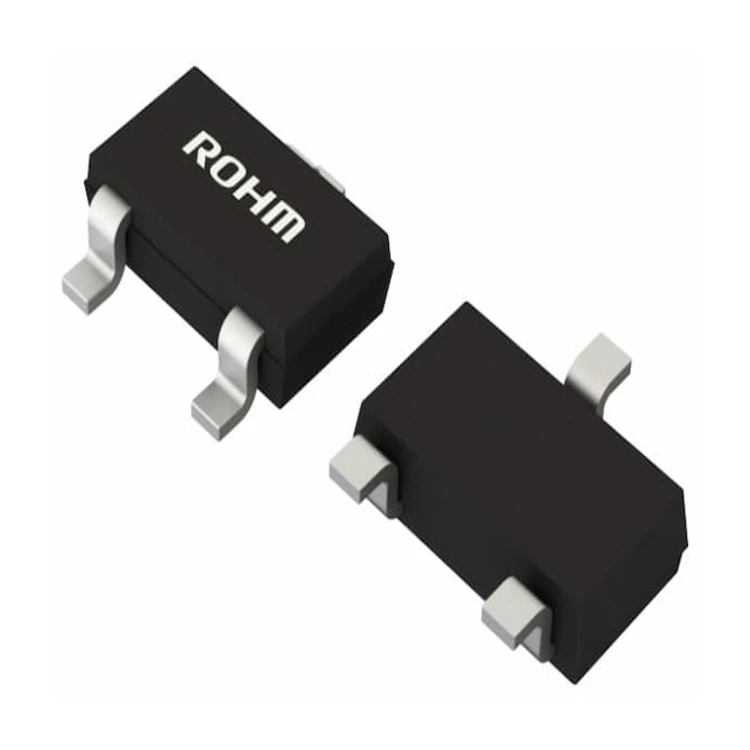

Whether you are looking for low - power consumption transistors or high - speed switching transistors, we have the right solutions for you. If you are interested in our products and would like to discuss your specific requirements, please feel free to reach out to us. We are here to assist you in finding the perfect NPN transistors for your projects.
References
- Millman, Jacob, and Christos C. Halkias. Integrated Electronics: Analog and Digital Circuits and Systems. McGraw - Hill, 1972.
- Sedra, Adel S., and Kenneth C. Smith. Microelectronic Circuits. Oxford University Press, 2010.


