


Hey there! As a supplier of AC - DC power modules, I often get asked about the input voltage requirements for these nifty little devices. So, I thought I'd take some time to break it all down for you in this blog post.
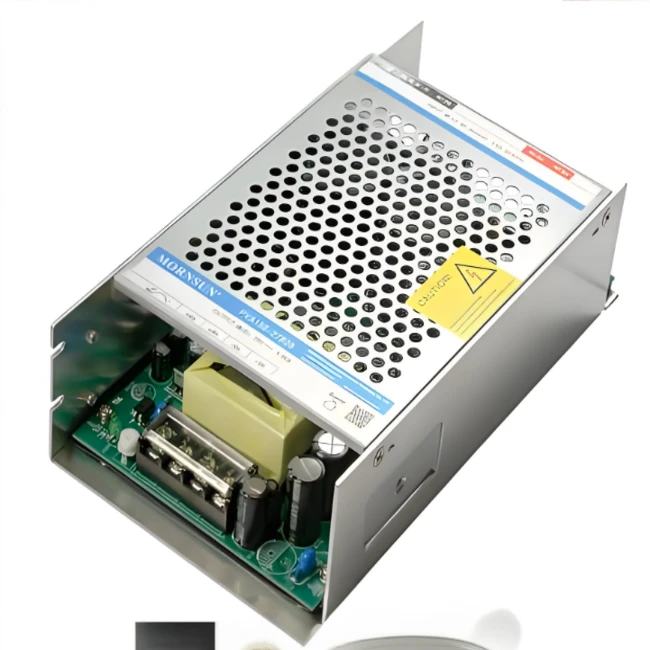
First off, let's understand what an AC - DC power module does. In simple terms, it takes an alternating current (AC) input and converts it into a direct current (DC) output. This is super important because most electronic devices run on DC power, but the electricity we get from the grid is in AC form.
Now, the input voltage requirement for an AC - DC power module can vary quite a bit. It depends on a bunch of factors like the design of the module, its intended application, and the geographical location where it'll be used.
Standard Input Voltage Ranges
Most common AC - DC power modules are designed to work with the standard mains voltages found in different parts of the world. In North America, the standard household voltage is around 120V AC at 60Hz. So, many power modules are built to handle an input voltage in the range of 100 - 120V AC. This gives a bit of leeway in case the voltage fluctuates a bit.
Over in Europe, Asia, and many other parts of the world, the standard mains voltage is 230V AC at 50Hz. Power modules for these regions usually have an input voltage range of 200 - 240V AC. This wider range helps to accommodate any minor variations in the grid voltage.
But what if you want a power module that can work in multiple regions? Well, that's where universal input voltage power modules come in. These bad boys are designed to handle a wide range of input voltages, typically from 90 - 264V AC. They're great for products that are sold globally or for applications where the power source might vary.
Why the Input Voltage Range Matters
You might be wondering why it's so important to have the right input voltage range for your AC - DC power module. Well, if the input voltage is too low, the power module might not be able to convert it properly, and your device might not get enough power to function correctly. On the other hand, if the input voltage is too high, it can damage the power module and the connected device.
For example, let's say you have a Industrial Grade AC - DC Switching Power Supply that's designed for a 230V AC input. If you plug it into a 120V AC outlet, it might not be able to provide enough power to run your industrial equipment. And if you accidentally plug a 120V - only power module into a 230V AC outlet, you could end up frying the module and your device.
Specialized Input Voltage Requirements
In some cases, you might need an AC - DC power module with a very specific input voltage requirement. For example, in industrial settings, there are often special power systems that operate at non - standard voltages. Some industrial machines might require a 480V AC input, and you'll need a power module that can handle that voltage.
Another example is in outdoor applications. If you're using a Waterproof AC - DC Power Supply for a security camera or a lighting system in a park, you might need to consider the power source. In some remote areas, the power might come from a solar panel system or a generator, which could have a different output voltage. So, you'll need to choose a power module that can work with that specific input voltage.
Efficiency and Input Voltage
The input voltage also has an impact on the efficiency of the AC - DC power module. Generally, power modules are most efficient when the input voltage is within the middle of their specified range. For example, a power module with an input voltage range of 100 - 240V AC might be most efficient when the input voltage is around 170 - 200V AC.
If the input voltage is at the lower or upper end of the range, the efficiency might drop a bit. This is because the power module has to work harder to convert the voltage. So, if you're looking for a High Efficiency AC - DC Power Converter, it's important to choose one with an input voltage range that matches your power source as closely as possible.
Choosing the Right Input Voltage for Your Application
When you're selecting an AC - DC power module for your project, the first thing you need to do is figure out what the input voltage of your power source is going to be. If you're using a standard household outlet, it's pretty easy to determine the voltage based on your location.
But if you're using a more complex power system, like a battery bank or a renewable energy source, you'll need to measure the output voltage of that system. Make sure to take into account any possible voltage fluctuations.
Once you know the input voltage, you can choose a power module with an appropriate input voltage range. If you're not sure, it's always a good idea to consult with a power electronics expert or with us, your trusted AC - DC power module supplier.
Conclusion
In conclusion, the input voltage requirement for an AC - DC power module is a crucial factor that you need to consider when choosing the right power module for your application. Whether you're looking for a power module for a small consumer device or a large industrial machine, understanding the input voltage range and its implications is essential.
If you're in the market for an AC - DC power module, we've got a wide range of options to suit your needs. From universal input voltage modules to specialized high - voltage modules, we've got you covered. Don't hesitate to reach out to us to discuss your specific requirements and get the best power module for your project. We're here to help you make the right choice and ensure that your devices run smoothly and efficiently.

References
- Power Electronics: Converters, Applications, and Design by Ned Mohan, Tore M. Undeland, and William P. Robbins
- Handbook of Electric Power Calculations by Hadi Saadat


